If you have ever stayed near the coast in the Azores and heard a strange, loud, almost eerie sound at night, there is a good chance you heard Cory’s shearwaters.
For visitors who do not know this bird, the sound can feel surprising. Some people describe it as a scream, a rough laugh, or a strange night call that is difficult to identify. This is especially common on islands such as Pico, where these seabirds can be heard near coastal areas, rural houses, and accommodation close to the sea.
But there is no reason to be afraid. Cory’s shearwater is one of the most emblematic seabirds in the Azores, and its nocturnal calls are part of the islands’ natural soundscape during the breeding season.
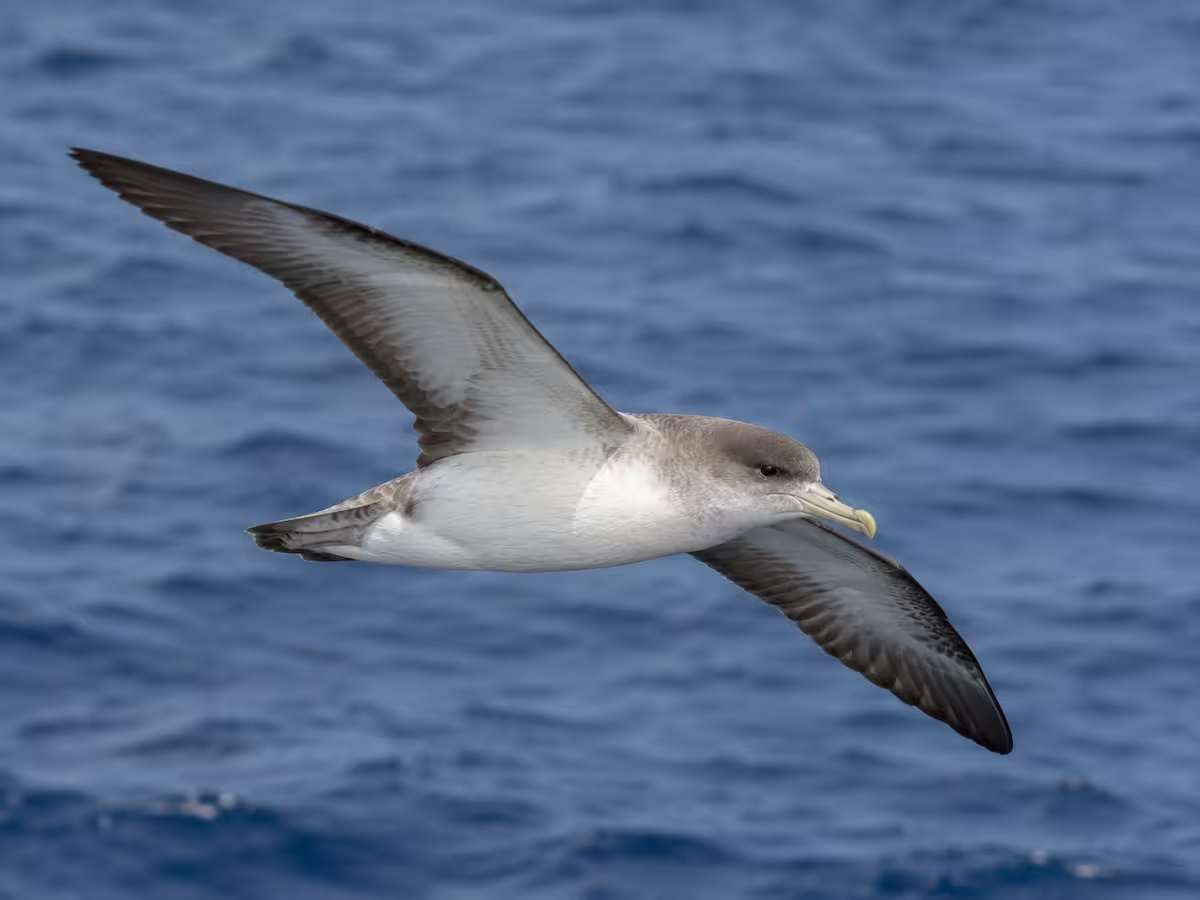
Table of Contents
What is Cory’s shearwater?
Cory’s shearwater, scientifically known as Calonectris borealis, is a seabird in the family Procellariidae. In Portuguese, it is called cagarro.
It is a bird adapted to life over the open ocean. It has long, narrow wings, a streamlined body, greyish-brown upperparts, pale underparts, and a strong, slightly hooked yellowish bill.
Although Cory’s shearwaters are very present in the Azores during part of the year, they are not land birds in the usual sense. They spend much of their lives at sea and come to land mainly to breed.
Cory’s shearwater.
Cagarro.
Calonectris borealis.
One of the archipelago’s most characteristic seabirds.
Why do Cory’s shearwaters make that strange sound at night?
The sound of Cory’s shearwaters is one of the most curious experiences for visitors sleeping near the coast in the Azores. At night, especially during the breeding season, adult birds return to their nesting areas and communicate with one another.
The call can be surprisingly loud. If you hear it for the first time, it may even feel unsettling because it does not sound like the typical song of a small bird. It is rough, repetitive, and very distinctive.
In reality, this “noise” is part of the bird’s natural behavior. Cory’s shearwaters use vocalizations for communication, pair recognition, and activity around nesting colonies.
On which Azores islands can you find Cory’s shearwaters?
Cory’s shearwaters can be found on several islands in the Azores, especially in coastal areas, cliffs, islets, rocky slopes, and places suitable for nesting.
For visitors, the most common experience is hearing them at night in areas close to the sea, especially during spring, summer, and early autumn. On islands such as Pico, Faial, São Jorge, Terceira, Graciosa, Santa Maria, Flores, Corvo, and São Miguel, there are areas where these seabirds are part of the natural environment.
This does not mean you will hear them at every accommodation or every night. Their presence and the intensity of the sound depend on the area, the time of year, the proximity to nesting colonies, and local conditions.
When are Cory’s shearwaters in the Azores?
Cory’s shearwaters return to the Azores for the breeding season. In general, they begin arriving in spring, remain during the nesting months, and juveniles leave the nests in autumn for their first flight toward the ocean.
| Period | What happens | What visitors may notice |
|---|---|---|
| Spring | Adults return to breeding areas. | More activity near coastal colonies. |
| Summer | Nesting and chick feeding. | Night calls may be more frequent in some areas. |
| Autumn | Juveniles leave the nests and take their first flight. | Extra attention is needed because young birds may become disoriented. |
| Winter | Many birds are away at sea. | Less chance of hearing nesting colonies near land. |
The period when juveniles leave the nest is especially important. Many young shearwaters can become disoriented by artificial lights when they leave the nest for the first time, particularly near roads, villages, and illuminated coastal areas.
Where do Cory’s shearwaters nest?
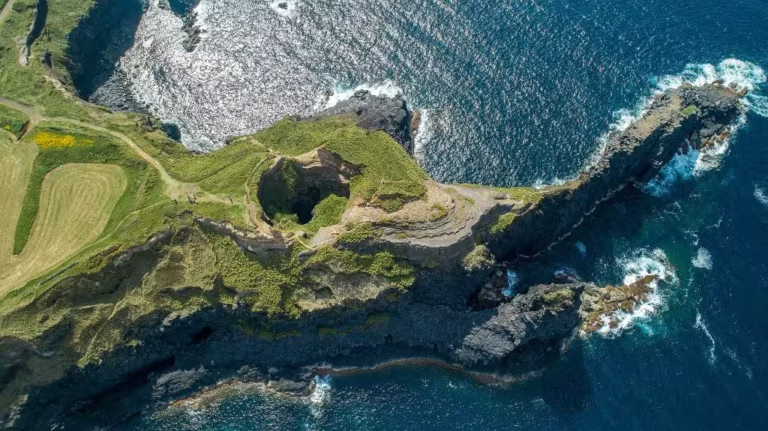
Cory’s shearwaters nest in coastal areas, cliffs, rocky slopes, natural cavities, burrows, and gaps between stones. They do not build elaborate nests like many land birds. Their nesting sites are usually discreet and protected.
One important detail is that adults usually visit the nest at night. This behavior helps reduce disturbance and predation risk, and it also explains why visitors hear Cory’s shearwaters more often at night than during the day.
What do baby Cory’s shearwaters look like?
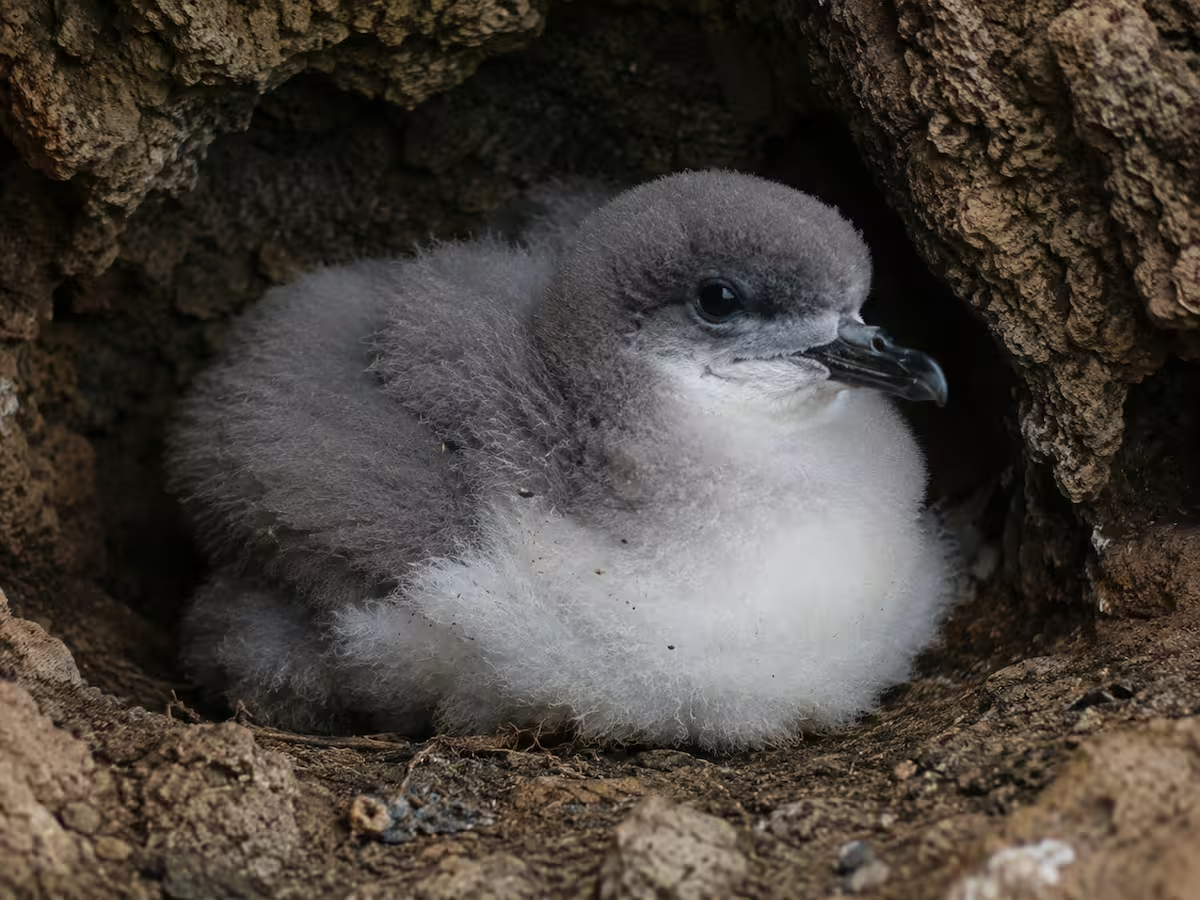
Cory’s shearwater chicks look very different from adults. They are fluffy, covered in pale or greyish down, and remain in the nest for several weeks while the adult birds search for food at sea.
During this period, the parents return to the nest to feed the chick. Each pair usually lays only one egg, making each chick very important to the breeding success of the species.
When the juvenile is ready to leave, it takes its first flight toward the ocean. This is the stage when many young birds become lost or fall near roads, houses, and illuminated areas.
What do Cory’s shearwaters eat?
Cory’s shearwaters feed mainly at sea. Their diet includes fish, squid, and other marine organisms. They can feed at the surface or dive to catch prey, and they are sometimes seen in areas with fish activity, dolphins, tuna, or fishing boats.
This connection to the ocean is one of the reasons why Cory’s shearwaters are important indicators of marine life. Although visitors often associate them with night sounds on land, most of their lives take place over the Atlantic.
Why are Cory’s shearwaters important for the Azores?
Cory’s shearwaters are part of the Azores’ natural identity. They are migratory seabirds that depend on healthy coastal habitats and connect the islands directly to the Atlantic marine ecosystem.
Their presence is a reminder that the Azores are not only about lakes, viewpoints, whales, and volcanoes. The archipelago is also an essential breeding territory for seabirds that use the islands to nest and the ocean to feed.
Protecting Cory’s shearwaters means protecting coastal areas, reducing disturbance around nesting sites, controlling introduced predators, and reducing the impact of artificial light on juveniles.
When to call 112: if the bird is on a road, at risk of being run over, injured, trapped, threatened by animals, or in an urgent situation.
When to call RIAC: if you need non-urgent guidance or referral to the Environment Service / Natural Park of the island where you are staying.
What should you do if you find a Cory’s shearwater on the ground?
If you find a Cory’s shearwater on the ground, especially in autumn, do not try to feed it, give it water, scare it, or launch it into the air. Many juveniles are simply disoriented or exhausted and need to be handled carefully and referred to the appropriate local services.
In general, the safest approach is to move calmly, protect the bird with a jacket, towel, or cloth, place it in a ventilated cardboard box, keep it in a dark, quiet place, and contact local campaign services or environmental authorities.
Do not feed it, do not give it water, do not force it to fly, and do not leave it exposed to dogs or cats.
Protect the bird, place it in a ventilated box, and contact local support services.
If you are staying in local accommodation and find a young shearwater, also tell your host. Many residents know the correct procedure and can help contact the right services.
Useful tools to plan better in the Azores




Why are artificial lights a problem?
Young Cory’s shearwaters use natural references to leave the nest and reach the sea. On dark or cloudy nights, artificial lights from roads, houses, hotels, cars, and villages can disorient them.
When this happens, some juveniles fall on roads, patios, gardens, or urban areas. They can become vulnerable to traffic, predators, stress, dehydration, or incorrect handling.
During the critical season, reducing unnecessary outdoor lights, closing curtains, and avoiding direct lighting toward coastal areas can help.
Are Cory’s shearwaters dangerous?
No. Cory’s shearwaters are not dangerous to people. Their calls can be surprising or even frightening if you do not know what they are, but they are simply seabirds behaving naturally.
The most important thing is not to disturb them, not to approach nests, not to shine flashlights directly at birds, and not to allow dogs or cats near juveniles or nesting areas.
Why do so many guests get scared by the sound?
Because the sound is unexpected. When people arrive in the Azores, they expect to hear the ocean, the wind, crickets, or maybe cows in the distance. Few visitors expect strong seabird calls near the coast during the night.
In rural or coastal accommodation, especially on islands such as Pico, the sound can feel strange on the first night. Once visitors understand what it is, many start to see it as one of the most authentic experiences of sleeping near the sea in the Azores.
Conclusion: if you hear strange “screams” at night in the Azores, they may be Cory’s shearwaters
Cory’s shearwaters are one of the most remarkable presences of Azorean nights near the sea. Their calls may sound strange, even unsettling the first time you hear them, but they are part of the natural life of the islands.
More than a curiosity, Cory’s shearwater is an important migratory seabird that is vulnerable to several human-related threats, especially when juveniles leave their nests.
If you hear Cory’s shearwaters during your trip, do not be afraid. You are hearing one of the most characteristic voices of the Atlantic in the Azores.
Recent content to keep planning better



What is Cory’s shearwater?
Cory’s shearwater is a migratory seabird known scientifically as Calonectris borealis. It spends much of its life at sea and returns to the Azores to breed.
Why do Cory’s shearwaters make noise at night?
During the breeding season, adults return to nesting areas mostly at night and communicate with each other. The sound may seem strange or frightening to visitors, but it is natural behavior.
When can you hear Cory’s shearwaters in the Azores?
They are most commonly heard during the breeding season, especially from spring to early autumn, in coastal areas close to nesting colonies.
Are Cory’s shearwaters dangerous?
No. Cory’s shearwaters are not dangerous to people. Their calls can be surprising, but they are simply seabirds behaving naturally.
What should I do if I find a Cory’s shearwater on the ground?
Do not feed it, give it water, or try to throw it into the air. Protect the bird carefully, place it in a ventilated box, keep it in a dark and quiet place, and contact local services or emergency support if the situation is urgent.
“`