The museums in Pico help you understand the island beyond the landscape. Between wine culture, whaling history, the whale industry, and the volcanic origin of the Azores, these spaces explain much of what makes Pico so different from the other islands.
If you have a day with unstable weather, wind, rain, or poor visibility for hikes and viewpoints, Pico’s museums are an excellent alternative. But they should not be seen only as a “plan B”: some of these places genuinely help you understand the island better, especially if you plan to visit the vineyards, go whale watching, climb Pico Mountain, or explore volcanic landscapes.
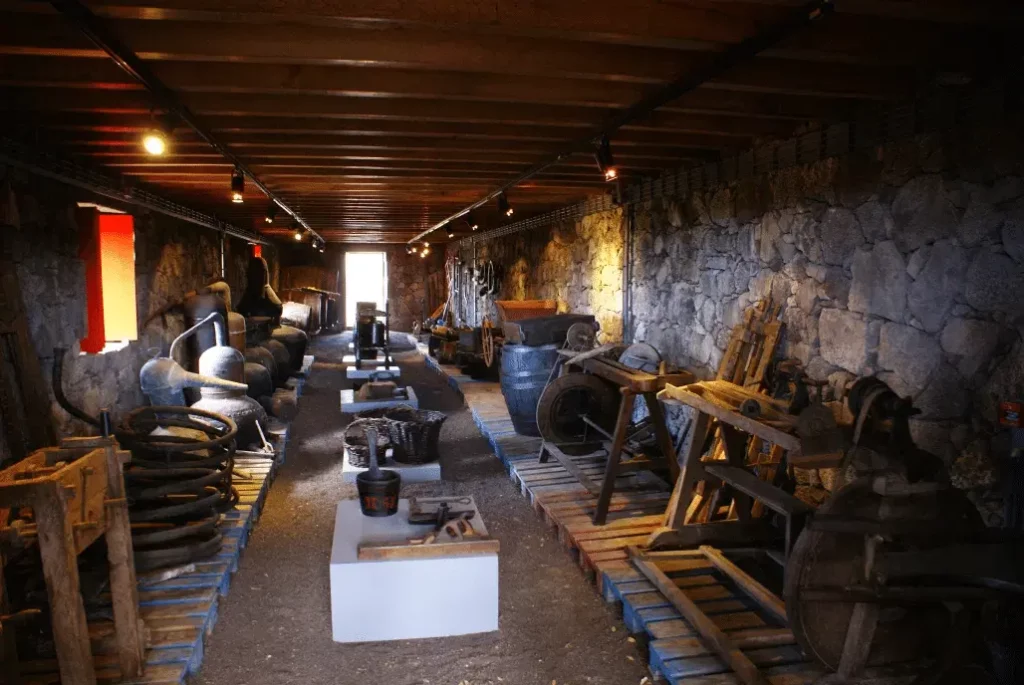
Museums in Pico – Wine museum
Table of Contents
In this guide, you will find the 5 most relevant museums and interpretation spaces in Pico, including what to see in each, when they are open, locations, contacts, opening hours, maps, and practical route suggestions.
Museums in Pico in 30 seconds
| Best for whaling history | Whalers’ Museum, in Lajes do Pico. |
|---|---|
| Best for industry and machinery | Whaling Industry Museum, in São Roque do Pico. |
| Best for wine | Wine Museum, in Madalena. |
| Best for UNESCO vineyards | Vineyard Culture Landscape Interpretation Center, in Lajido de Santa Luzia. |
| Best for volcanoes and geology | House of Volcanoes, in Lajido de Santa Luzia. |
| Best on a rainy day | House of Volcanoes, Whalers’ Museum, or Whaling Industry Museum. |
| Important | Always confirm opening hours, guided visits, and booking requirements before going. |
Which museum should you choose in Pico?
If you do not have time to visit all of them, choose based on the type of trip you are planning. Pico has a few museums, but each is closely tied to an essential part of the island’s identity.
Recent content to keep planning better
| If you want to understand… | Visit first | Combine with |
|---|---|---|
| Whaling history | Whalers’ Museum | Lajes do Pico, whale watching, and the Whaling Industry Museum. |
| The industrial processing of whales | Whaling Industry Museum | São Roque, the north coast, and whaling history. |
| Pico wine | Wine Museum | Madalena, vineyards, Criação Velha, and wine tastings. |
| The UNESCO vineyard landscape | Vineyard Culture Landscape Interpretation Center | Lajido de Santa Luzia, the vineyard trail, and the House of Volcanoes. |
| The volcanic origin of the island | House of Volcanoes | Pico Mountain, Gruta das Torres, Lajido, and lava fields. |
1. Vineyard Culture Landscape Interpretation Center
The Vineyard Culture Landscape Interpretation Center is located in Lajido de Santa Luzia and is one of the best starting points for understanding Pico’s vineyard landscape, which was designated a UNESCO World Heritage Site in 2004.
This space helps explain why Pico’s vineyards are so different: basalt stone walls, small vineyard plots, lava rock, wind, salt, the ocean, and the human ability to produce wine in a landscape that looks difficult at first.
It is especially useful if you plan to walk around Lajido, visit Criação Velha, do the Vinhas da Criação Velha trail, or taste Pico wines.
| Area | Lajido de Santa Luzia, São Roque do Pico. |
|---|---|
| Best for | Understanding the vineyard landscape, Lajido, and UNESCO heritage. |
| Opening hours | November to March: Tuesday to Saturday and holidays, 9:00 a.m.–12:30 p.m. and 1:30 p.m.–5:00 p.m. April to October: daily and holidays, 10:00 a.m.–12:30 p.m. and 1:30 p.m.–6:00 p.m. |
| Price | Free entry, according to the official information available. |
| Guided visits | By prior booking, with at least 72 hours’ notice. Official duration: 30 to 45 minutes. |
| Contacts | +351 965 896 313 · [email protected] |
| Map | Google Maps · Waze · Official page |

2. Wine Museum
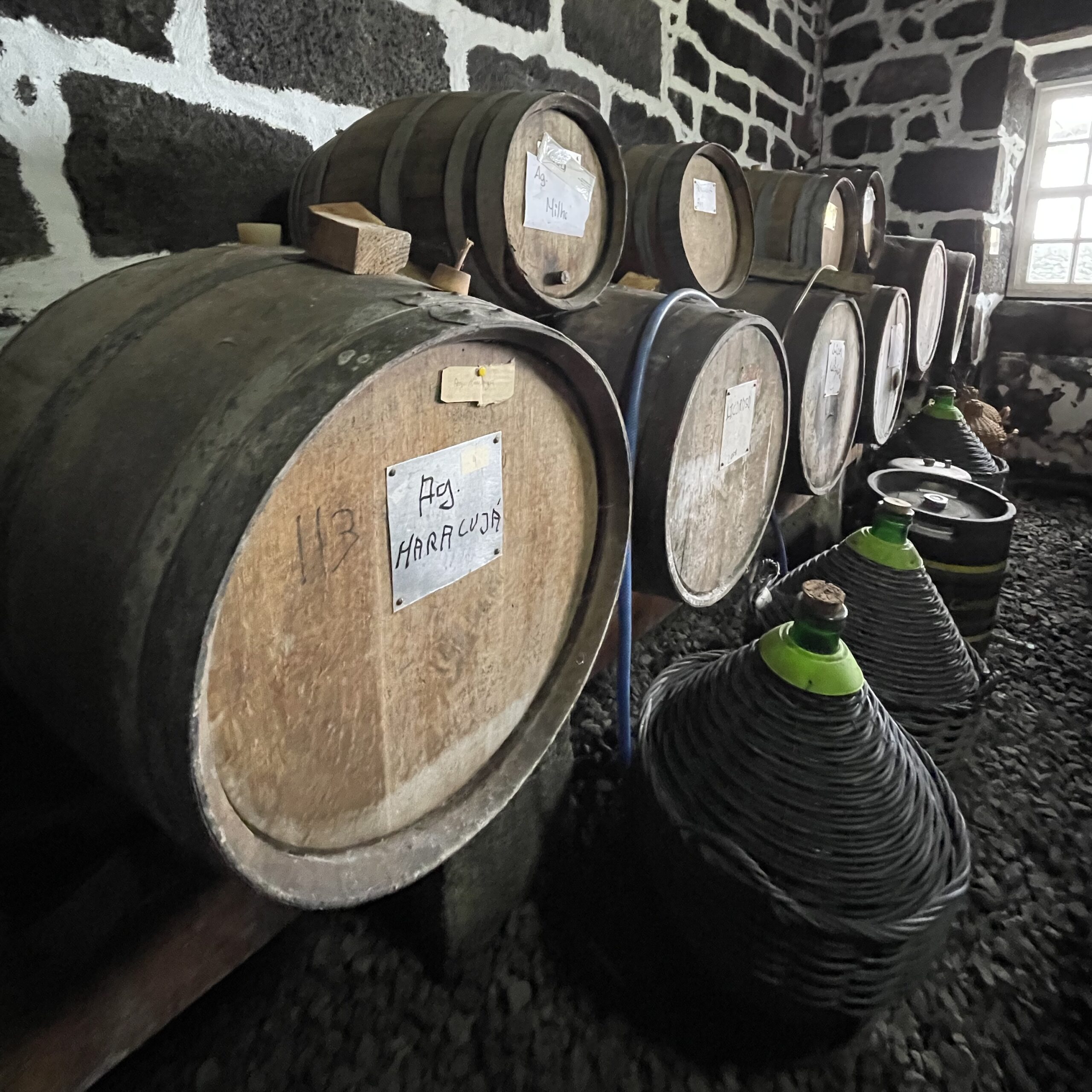
The Wine Museum in Madalena is an essential stop for understanding the historic importance of wine on Pico. It is installed in spaces connected to the former Carmelite Convent and includes areas dedicated to the vineyard, stills, winepress, convent house, and surrounding landscape.
One of the most memorable parts of the visit is the presence of centuries-old dragon trees, which make the place very photogenic and show that this is not only an indoor museum: it is also a place of landscape, agricultural memory, and connection between wine, the sea, and Pico Mountain.
If you are staying in Madalena or exploring the western side of the island, this is one of the easiest museums to include in your itinerary.
| Area | Madalena. |
|---|---|
| Best for | Pico wine, dragon trees, agricultural history, and a short visit near Madalena. |
| Opening hours | Summer, April 1 to September 30: Tuesday to Sunday, 10:00 a.m.–5:30 p.m. Winter, October 1 to March 31: Tuesday to Sunday, 9:30 a.m.–5:00 p.m. Closed on Mondays. |
| Contacts | +351 292 679 348 · [email protected] |
| Map | Google Maps · Waze · Official page |

3. Whalers’ Museum
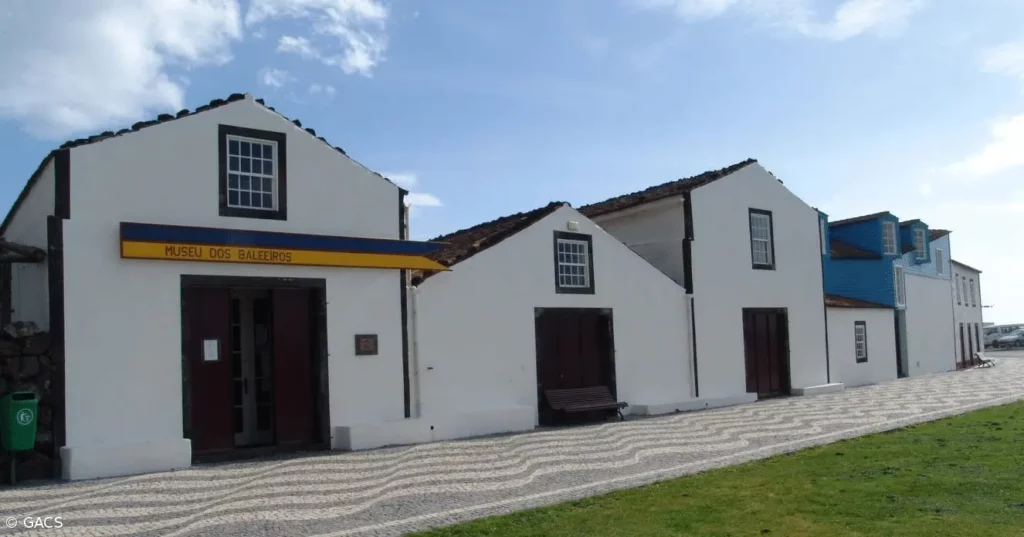
The Whalers’ Museum, in Lajes do Pico, is probably the most important museum on the island for understanding the human history connected to the sea. It is housed in former whaling boat houses and explains the artisanal, seasonal, and coastal whaling activity that deeply marked Pico.
The exhibition covers the Azorean whaling boat, the blacksmith’s workshop, the whaler on land, naval construction, and whaling art known as scrimshaw. It is especially powerful if you plan to go whale watching, because it shows the contrast between former whale hunting and today’s responsible cetacean observation.
| Area | Lajes do Pico. |
|---|---|
| Best for | Whaling history, Lajes do Pico, maritime culture, and connection to whale watching. |
| Opening hours | Summer, April 1 to September 30: Tuesday to Sunday, 10:00 a.m.–5:30 p.m. Winter, October 1 to March 31: Tuesday to Sunday, 9:30 a.m.–5:00 p.m. Closed on Mondays. |
| Contacts | +351 292 679 340 · [email protected] |
| Map | Google Maps · Waze · Official page |
4. Whaling Industry Museum
The Whaling Industry Museum, in São Roque do Pico, shows the industrial side of whaling. If the Whalers’ Museum explains the men, boats, and whaling culture, this branch shows the factory, machines, processes, and transformation of sperm whales into oil, flour, fertilizer, and other products.
The museum is located in the former whale factory associated with Armações Baleeiras Reunidas, Lda., and preserves equipment such as boilers, autoclaves, winches, dryers, oil tanks, flour mills, an electric power plant, and other industrial elements.
It is less “romantic” than the Whalers’ Museum, but very important for understanding the economic and industrial scale that whaling once had in Pico.
| Area | São Roque do Pico. |
|---|---|
| Best for | Industrial archaeology, machinery, the whale factory, and economic history. |
| Opening hours | Summer, April 1 to September 30: Tuesday to Sunday, 10:00 a.m.–5:30 p.m. Winter, October 1 to March 31: Tuesday to Sunday, 9:30 a.m.–5:00 p.m. Closed on Mondays. |
| Contacts | +351 292 679 349 · [email protected] |
| Map | Google Maps · Waze · Official page |
5. House of Volcanoes
The House of Volcanoes, in Lajido de Santa Luzia, is not a traditional museum. It is an interactive interpretation center dedicated to volcanoes, the geodiversity of the Azores, and the geological formation of the islands.
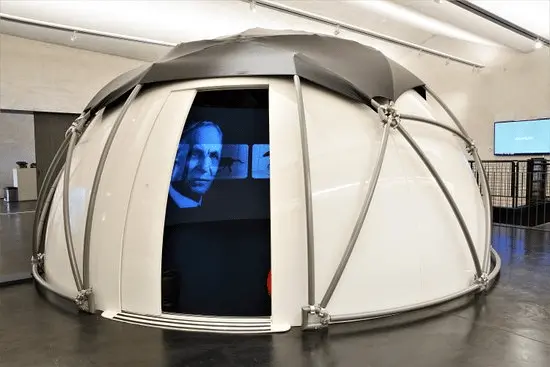
The space uses resources such as a seismic simulator and an interactive dome to explain Earth’s internal energy, the formation of the archipelago, and volcanic phenomena. It is very useful for families, travelers planning to climb Pico Mountain, or anyone who wants to better understand the island’s volcanic origin.
Because it is located in the same Lajido de Santa Luzia area, it makes sense to combine it with the Vineyard Culture Landscape Interpretation Center. In one area, you can connect two essential dimensions of Pico: volcanoes and vineyards.
| Area | Lajido de Santa Luzia, São Roque do Pico. |
|---|---|
| Best for | Volcanoes, geology, families, rainy days, and understanding Pico’s origin. |
| Opening hours | November to March: Tuesday to Saturday and holidays, 9:00 a.m.–12:30 p.m. and 1:30 p.m.–5:00 p.m. April to October: daily and holidays, 10:00 a.m.–12:30 p.m. and 1:30 p.m.–6:00 p.m. Last entry 60 minutes before closing. |
| Price | Children 0–6: free; junior 7–14: €2; adult 15–64: €5; senior 65+: €2; family: €10; Azores residents: free. |
| Guided visits | By prior booking, with at least 72 hours’ notice. Official duration: 60 minutes. |
| Contacts | +351 292 644 328 · [email protected] |
| Map | Google Maps · Waze · Official page |
Practical museum routes in Pico
Pico’s museums work best when they are integrated into routes by area. This prevents crossing the island just for a short visit and helps you make better use of the day.
| Route | Recommended combination | Best for |
|---|---|---|
| Madalena and wine | Wine Museum + Criação Velha + natural swimming pools + wine tasting. | Travelers staying in Madalena or exploring Pico’s wine culture. |
| Lajido and volcanoes | House of Volcanoes + Vineyard Culture Center + Lajido de Santa Luzia. | Families, geology, UNESCO vineyard landscape, and unstable-weather days. |
| Lajes and whaling | Whalers’ Museum + Lajes town center + whale watching. | Understanding the link between old whaling and modern cetacean watching. |
| Industrial São Roque | Whaling Industry Museum + harbor area + north coast. | Machinery, industry, economic history, and less obvious museums. |
Museums in Pico with children
For families, the House of Volcanoes is usually the most appealing option because it is more interactive. The Whalers’ Museum can also work well, especially if children are interested in boats, the sea, and animals. The Whaling Industry Museum may feel heavier for younger children, but it can be interesting for teenagers or adults curious about machinery and industrial processes.
With children, always confirm duration, booking requirements, and opening hours. In some spaces, guided visits or educational activities may require prior booking.
Useful partners to complete a cultural route in Pico
Museums help you understand the island, but the experience becomes more complete when you combine culture with mobility, wine, and landscape. These partners can make sense for completing the route.

AUTATLANTIS
- Available across 7 Azores islands
- No mandatory credit card
- Excess from 0€ · deposit from 100€
A strong option for travelers who want more payment flexibility and better coverage options across several Azores islands.
TRIPIX
- Half-day or full-day wine tour
- Wine tastings and local context
- A good way to explore Pico’s wine culture
A strong option for discovering Pico’s wine heritage with a local guide and an exclusive MyAzoresHome discount.

LAVAFACES
- 8-hour tour on Pico Island. Licensed guide
- Vineyards, North Coast, Lagoa do Capitão and Lajes
- From 2 to 8 people. Group or private
A good option for discovering Pico with more local context, volcanic scenery and cultural heritage in a comfortable way.
Are Pico’s museums worth visiting?
Yes, especially if you want to understand Pico beyond viewpoints. The island has three major identity themes — wine, whaling, and volcanism — and the museums help connect those themes to the landscapes you see during the trip.
If you have limited time, choose strategically: House of Volcanoes for geology, Whalers’ Museum for maritime history, Wine Museum for wine culture, and the Vineyard Culture Landscape Interpretation Center for understanding the UNESCO landscape. If you get a rainy day, strong wind, or rough sea, these spaces can turn what looked like a lost day into one of the most useful parts of the trip.
What are the main museums in Pico?
The main museum and interpretation spaces in Pico are the Whalers’ Museum, the Whaling Industry Museum, the Wine Museum, the Vineyard Culture Landscape Interpretation Center, and the House of Volcanoes.
What is the best museum in Pico?
It depends on your interest. For whaling history, choose the Whalers’ Museum. For wine, choose the Wine Museum or the Vineyard Culture Landscape Interpretation Center. For geology and volcanoes, choose the House of Volcanoes.
Is the House of Volcanoes a museum?
The House of Volcanoes is mainly an interactive interpretation center, not a traditional museum. It explains volcanoes, Azorean geodiversity, and the geological formation of the islands.
Which museum should I visit in Pico on a rainy day?
On a rainy day, the House of Volcanoes, the Whalers’ Museum, and the Whaling Industry Museum are good options. Always confirm opening hours and booking requirements before going.
Where is the Whalers’ Museum in Pico?
The Whalers’ Museum is in Lajes do Pico, on Rua dos Baleeiros, no. 13. It is one of the best places to understand the history of whaling on the island.
Where is the Wine Museum in Pico?
The Wine Museum is in Madalena, on Rua do Carmo. It is a good visit for understanding the history of vineyards and wine production in Pico.
Is the Vineyard Culture Landscape Interpretation Center worth visiting?
Yes. It is a good starting point for understanding Pico’s vineyard landscape, classified as a UNESCO World Heritage Site in 2004, especially if you plan to visit Lajido or Criação Velha.
Do I need to book museum visits in Pico?
Not always, but it is recommended to confirm first. At the House of Volcanoes and the Vineyard Culture Landscape Interpretation Center, guided visits require prior booking with at least 72 hours’ notice.